
How to Use Avast: A Beginner’s Step-by-Step Guide
Cyber threats such as viruses, ransomware, spyware, and phishing attacks can compromise your personal information and slow down your devices. Without reliable security software, even routine activities like downloading files or opening email attachments can expose your computer to malicious software.
By TechScaleMedia Editorial · Updated July 2026 · 11 min read

Avast is a cybersecurity solution that provides antivirus protection, real-time threat detection, ransomware protection, web security, and privacy tools to help safeguard your devices. Its intuitive interface and automated features make it easy for users of all experience levels to stay protected.
Whether you’re securing your home computer, laptop, or mobile device, this guide will show you exactly how to set up and use Avast from scratch.
How Do You Set Up and Use Avast?
Quick Answer
To use Avast:
- Create your Avast account.
- Download and install the Avast application.
- Activate your subscription or free version.
- Run your first Smart Scan.
- Enable real-time protection.
- Configure your security settings.
- Schedule regular virus scans.
- Review detected threats and security alerts.
- Keep Avast updated automatically.
- Monitor your device’s security status regularly.
Prerequisites
Before you begin, make sure you have:
- An Avast account
- Avast Free Antivirus or a paid Avast subscription
- A Windows, macOS, Android, or iOS device
- A stable internet connection
- Administrator privileges
- Permission to install software
- Basic computer knowledge
Create a Workflow Manually (Recommended for Beginners)
If you’re new to cybersecurity, protecting your first device in Avast is the best way to understand how the platform actually works.
Step 1: Create Your Avast Account
Visit the Avast website and create your account.
During registration:
- Enter your email address.
- Create a secure password.
- Verify your email if prompted.
- Sign in to your Avast dashboard.
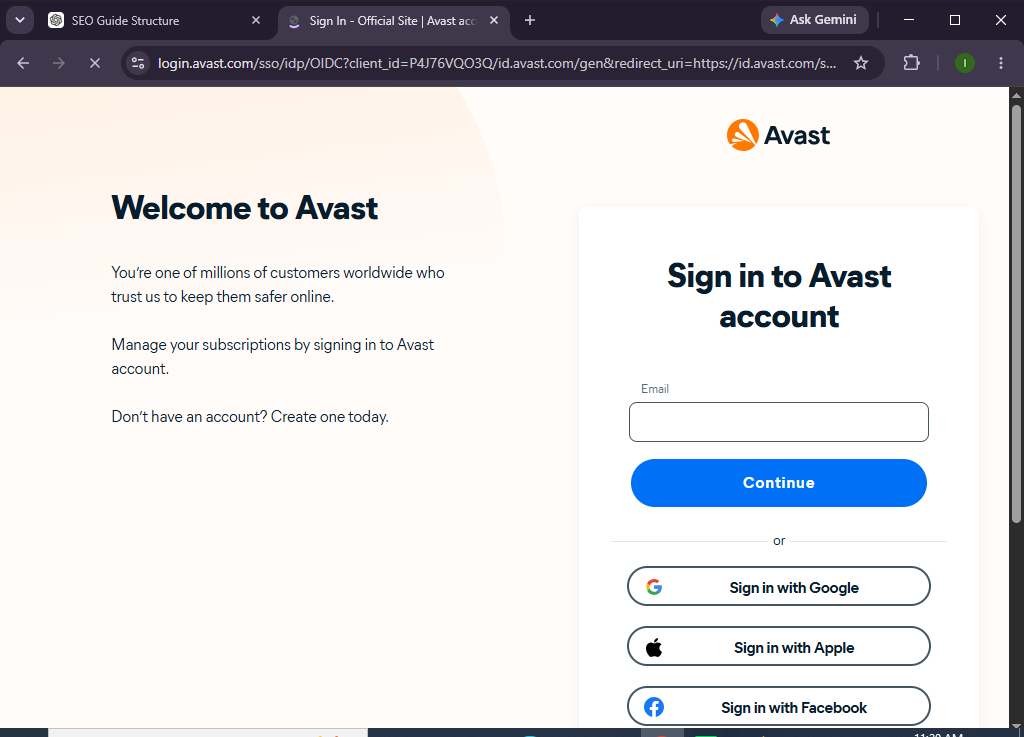
Your account lets you manage subscriptions, devices, and security settings.
Step 2: Download Avast
Download the correct version for your device.
Supported platforms include:
- Windows
- macOS
- Android
- iPhone/iPad
Save the installer to your device.
Step 3: Install the Application
Run the installer.
Follow the setup wizard to:
- Accept the license agreement.
- Complete the installation.
- Restart your computer if required.
Launch Avast after installation.
Step 4: Activate Your Protection
Open Avast.
Then:
- Sign in to your Avast account.
- Activate your subscription or free version.
- Confirm that your protection is active.
The dashboard will display your current security status.
Step 5: Run Your First Smart Scan
Click Run Smart Scan.
Avast scans your device for:
- Viruses
- Malware
- Spyware
- Security vulnerabilities
- Performance issues
- Outdated software
Review the scan results after completion.
Step 6: Enable Real-Time Protection
Open Protection Settings.
Verify that the following features are enabled:
- File Shield
- Web Shield
- Behavior Shield
- Ransomware Shield
- Email Shield (if available)
These tools help detect threats as they occur.
Step 7: Customize Security Settings
Adjust your preferences by configuring:
- Scan schedules
- Notification settings
- Exception lists
- Automatic updates
- Privacy options
Choose settings that match your security needs.
Step 8: Schedule Automatic Scans
Create a recurring scan schedule.
Options include:
- Daily
- Weekly
- Monthly
Automatic scans help detect threats without manual intervention.
Step 9: Review Security Alerts
Check your Avast dashboard regularly.
Monitor:
- Threat detections
- Quarantined files
- Security recommendations
- Software updates
- Protection status
Respond to alerts promptly to maintain device security.
Step 10: Keep Avast Updated
Enable automatic updates.
Regular updates provide:
- New virus definitions
- Security improvements
- Performance enhancements
- Bug fixes
Keeping Avast updated ensures protection against the latest threats.
Want to make your devices more resilient against cyber threats?
Discover how Avast can help you stay protected with real-time security and easy-to-manage protection features.
How Can You Get the Best Protection with Avast?
Tips
- Run Smart Scans regularly.
- Enable all real-time protection features.
- Keep virus definitions updated.
- Schedule weekly full system scans.
- Scan external USB drives before opening files.
- Review quarantined files before deleting them.
- Update your operating system regularly.
- Monitor security alerts frequently.
What Should You Avoid When Using Avast?
Common Mistakes
- Ignoring security alerts
- Turning off real-time protection
- Skipping software updates
- Downloading files from untrusted websites
- Running multiple antivirus programs simultaneously
- Forgetting to perform regular scans
- Opening suspicious email attachments
How Can You Keep Your Devices Secure with Avast?
Best Practices
- Enable automatic updates.
- Leave real-time protection turned on.
- Schedule regular system scans.
- Back up important files regularly.
- Use strong passwords for your online accounts.
- Enable multi-factor authentication whenever possible.
- Keep your operating system updated.
- Avoid downloading software from unknown sources.
- Monitor security reports frequently.
- Educate household members about safe browsing habits.
What Should You Do If Avast Isn’t Working?
Troubleshooting
Avast won’t install
- Restart your computer.
- Remove conflicting antivirus software.
- Download the latest installer.
Protection is disabled
- Restart Avast.
- Check your subscription status.
- Re-enable protection from the dashboard.
Smart Scan won’t complete
- Close unnecessary applications.
- Restart your device.
- Update Avast before scanning again.
Updates fail
- Check your internet connection.
- Restart Avast.
- Try updating manually.
Frequently Asked Questions
Is Avast free?
Yes. Avast offers a free antivirus version along with premium plans that include additional security and privacy features.
Does Avast protect against ransomware?
Yes. Avast includes ransomware protection features designed to help safeguard your important files.
Can Avast detect phishing websites?
Yes. Avast includes web protection features that help identify and block many malicious websites.
Does Avast slow down my computer?
Avast is designed to provide security while minimizing the impact on system performance, though performance may vary depending on your device.
Can I use Avast on multiple devices?
Yes. Depending on your subscription plan, Avast supports multiple devices across Windows, macOS, Android, and iOS.
Does Avast update automatically?
Yes. Avast can automatically download the latest virus definitions and software updates when automatic updates are enabled.
Conclusion
Avast provides a comprehensive security solution that combines antivirus protection, real-time threat detection, ransomware defense, and web security in one easy-to-use platform. Its automated scans and customizable settings help users protect their devices without requiring advanced technical knowledge.
By following this guide—creating your account, installing Avast, running your first Smart Scan, enabling real-time protection, scheduling automatic scans, and keeping the software updated—you can build a stronger defense against today’s evolving cyber threats.
Build a safer digital environment with Avast.
Install the software, perform your first security scan, and take a proactive step toward protecting your devices, personal data, and everyday online activities.