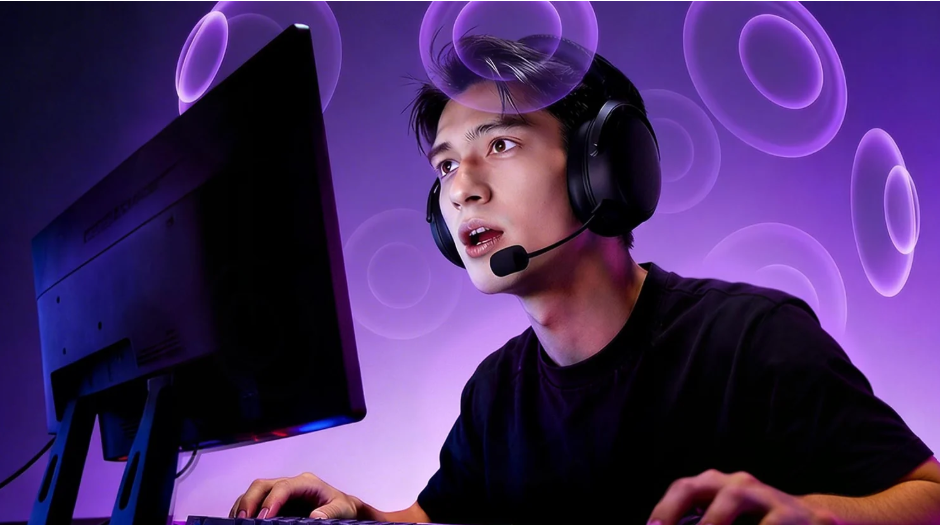

What Is 7.1 Surround Sound in Gaming? A Complete Guide
7.1 surround sound creates a more immersive gaming experience by using multiple audio channels to make sounds feel like they are coming from different directions around you.
By TechScaleMedia Editorial · Updated July 2026 · 11 min read
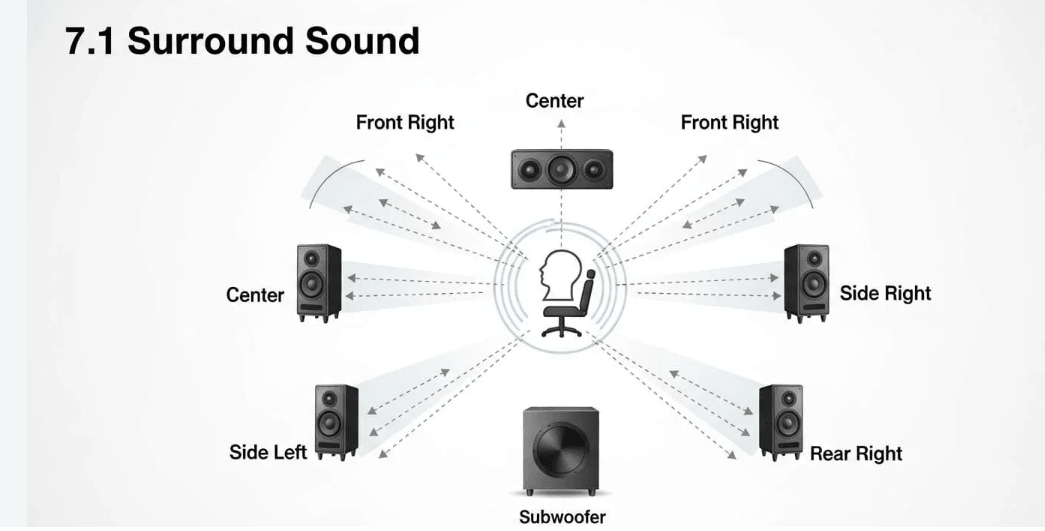
If you’re shopping for a gaming headset, you’ve probably come across 7.1 surround sound as a key feature. But does it actually make your games sound better, or is it simply another specification used in headset marketing?
Understanding 7.1 surround sound can help you choose the right gaming audio setup for your needs. Unlike a traditional home theater, most gaming headsets don’t contain eight separate speakers. Instead, they use virtual surround processing to simulate sounds coming from different positions around you, helping create a wider and more immersive soundstage.
In this guide, we’ll explain what 7.1 surround sound means, how it works in gaming headsets, how it compares with stereo, where it can be useful, and what to consider before choosing a headset.
If you’re looking to improve your gaming audio, keep reading to find out whether 7.1 surround is worth using for your setup.
What Is 7.1 Surround Sound in Gaming?
7.1 surround sound is an audio technology that simulates an eight-channel surround sound environment. In gaming headsets, the effect is usually created through software and digital signal processing (DSP) rather than eight physical speakers.
The “7” represents seven main audio channels, while “.1” represents a dedicated low-frequency channel for bass. In a traditional home theater, these channels are produced by physically positioned speakers. A gaming headset instead processes the audio and delivers it through its two physical drivers.
The result is a simulated three-dimensional sound field that can make sounds such as footsteps, gunfire, and vehicles appear to come from different directions.
What Does 7.1 Mean?
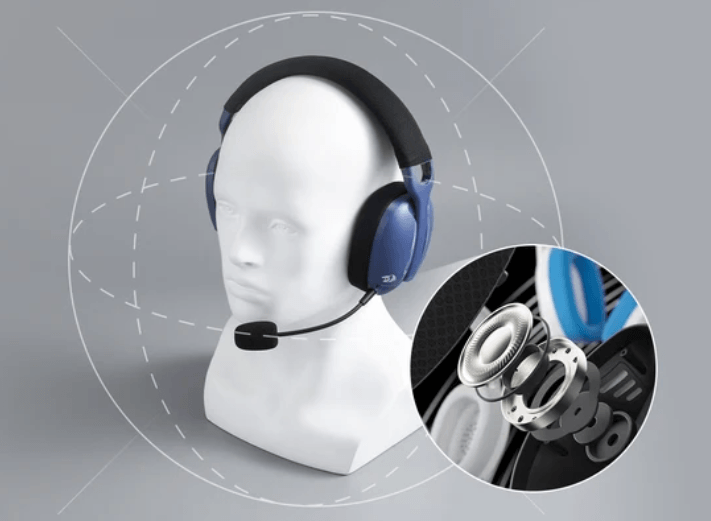
The 7.1 designation describes the channel configuration used in traditional surround sound.
A physical 7.1 system typically includes:
- Center channel
- Front-left channel
- Front-right channel
- Side-left channel
- Side-right channel
- Rear-left channel
- Rear-right channel
- One low-frequency subwoofer channel
The seven main channels handle directional audio, while the “.1” channel focuses on low-frequency effects and bass.
In a gaming headset, however, these channels are generally simulated rather than physically separated. Software recreates the characteristics of a surround setup and sends the processed signal through the headset’s left and right drivers.
How Does 7.1 Surround Sound Work in a Gaming Headset?
Most gaming headsets have only two physical drivers, one for each ear. So how can they create the impression of multiple audio channels?
Virtual surround processing works by manipulating the audio signal before it reaches your ears.
1. The Game Generates Positional Audio
Modern games can assign sounds to different locations within the virtual environment. For example, footsteps may originate behind your character while gunfire comes from the right.
2. DSP Processes the Sound
The headset or accompanying software processes those sounds using digital signal processing (DSP).
It can adjust characteristics such as timing, volume, and frequency to imitate how sound would reach your ears from different positions.
3. The Two Drivers Reproduce the Processed Audio
The processed signal is sent to the left and right headset drivers.
Each ear receives slightly different audio information, creating the cues your brain uses to determine the apparent location of a sound.
4. Your Brain Interprets the Position
Your hearing naturally uses differences in sound arrival time and level between your ears to estimate where sounds originate.
Virtual surround processing attempts to reproduce some of these cues digitally, creating the perception that audio is coming from different areas around you.
This is why 7.1 surround sound in gaming is better understood as positional audio simulation rather than a literal eight-speaker setup.
Virtual 7.1 vs. True Physical 7.1
The distinction between virtual and physical surround sound is important when choosing a gaming headset.
| Feature | True 7.1 Surround | Virtual 7.1 Headset |
| Physical speakers | Seven speakers + subwoofer | Usually two drivers |
| Audio processing | Separate physical channels | Software/DSP processing |
| Typical setup | Home theater | Gaming headset |
| Surround effect | Created by speaker placement | Digitally simulated |
| Space required | Larger room setup | Compact headset |
A genuine 7.1 system places speakers around the listener. A virtual 7.1 headset uses software to reproduce some of the same spatial cues through two drivers.
Therefore, seeing “7.1” on a gaming headset does not mean it contains eight individual speakers.
Does 7.1 Surround Sound Help You Play Better?
It can, particularly in games where sound positioning is important.
A good virtual surround implementation can make it easier to distinguish where sounds are coming from. This may help with:
- Footsteps approaching from behind
- Gunfire from another direction
- Vehicles moving around you
- Environmental sounds
- Explosions and other positional effects
This can be useful in FPS games, battle royale titles, and other games that rely heavily on spatial awareness.
However, 7.1 surround isn’t guaranteed to improve performance. The result depends on the quality of the headset’s processing, its overall audio tuning, and the game’s own audio design.
What to Look for in a 7.1 Gaming Headset
If you’re considering a headset with virtual 7.1, don’t make the channel count your only deciding factor.
DSP and Software
The quality of the surround processing has a major impact on how convincing the spatial effect sounds.
Driver Quality
The headset’s physical drivers remain the foundation of its audio performance. Good processing cannot completely compensate for poor hardware.
Connection
Some headsets require USB connectivity or companion software to access their virtual surround features, while others may support spatial audio through different connection methods.
Platform Compatibility
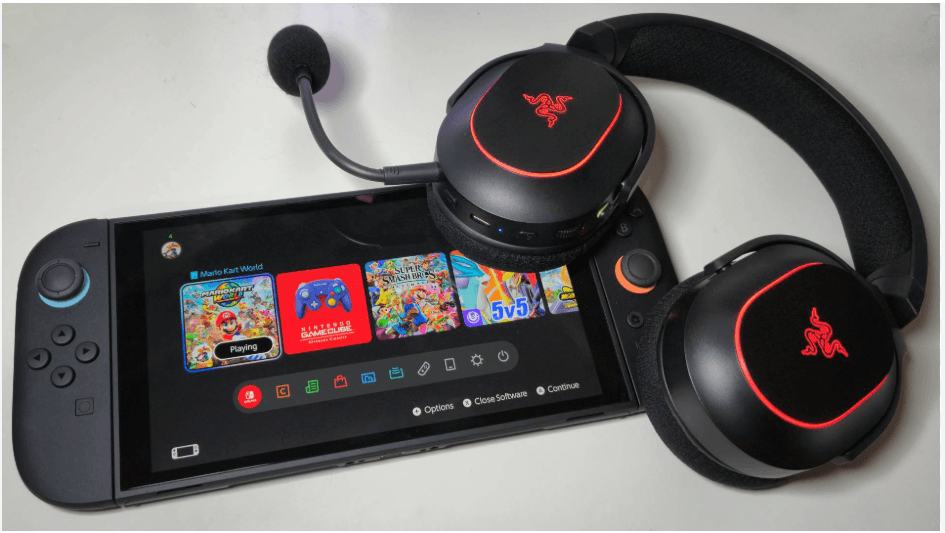
Check whether the headset’s surround features work with your preferred platform, such as PC, PlayStation, Xbox, or Nintendo Switch.
Microphone Performance
Surround sound and microphone quality are separate features. A headset can produce excellent spatial audio while still having an average microphone, so evaluate both independently.
Common Misconceptions About 7.1 Surround Sound
“7.1 Means Eight Speakers”
Not usually. Most gaming headsets use two physical drivers and simulate additional channels through software.
“7.1 Is Always Better Than Stereo”
Not necessarily. A high-quality stereo implementation can sound clearer and more precise than poorly designed virtual surround.
“More Audio Channels Automatically Mean Better Sound”
Channel count alone doesn’t determine audio quality. DSP processing, driver quality, tuning, and the game’s audio engine all contribute to the final result.
“Every Game Benefits Equally From 7.1”
No. The usefulness of virtual surround depends partly on how a particular game handles positional and spatial audio.
Best Practices for Using 7.1 Surround Sound
To get the most from virtual surround:
- Compare it with stereo: Use the same game and audio settings when testing both modes.
- Pay attention to positional cues: Focus on footsteps, gunfire, and environmental sounds rather than simply judging how “wide” the audio feels.
- Avoid unnecessary processing: If your game already provides effective spatial audio, additional processing may not always improve the result.
- Keep your headset software updated: Updates can improve compatibility and audio processing.
- Choose based on overall performance: Comfort, drivers, microphone quality, and software support matter alongside surround capabilities.
Frequently Asked Questions
Do gaming headsets really have eight speakers inside them?
No. Most gaming headsets with 7.1 surround use two physical drivers and software-based processing to simulate a multi-channel surround environment.
Is 7.1 surround sound better than stereo?
It depends on the headset, game, and listener. Virtual 7.1 can provide a wider spatial presentation, while stereo may offer clearer or more natural audio in some situations.
Is 7.1 surround sound good for competitive gaming?
It can be useful for games that depend on positional cues, such as footsteps and gunfire. However, some competitive players prefer stereo because they find it easier to interpret quickly.
Can regular stereo headphones use 7.1 surround sound?
Yes, in some cases. Spatial audio technologies such as Windows Sonic, DTS Headphone:X, and Dolby Atmos can provide virtual surround effects through compatible stereo headphones.
Does 7.1 surround sound require USB?
Not always. However, some gaming headsets rely on USB connections and companion software to enable their virtual surround features.
Conclusion
7.1 surround sound is a virtual audio technology designed to create the perception of multiple sound channels using a gaming headset’s two physical drivers. Through digital signal processing, it can make sounds appear to come from different directions, adding spatial awareness and immersion to supported games.
For FPS and competitive gaming, this can make positional cues such as footsteps and gunfire easier to follow. In single-player and open-world games, it can also contribute to a more expansive soundscape.
Still, 7.1 isn’t automatically better than stereo. The quality of the DSP, headset drivers, audio tuning, and game support all influence the experience. The best approach is to compare both modes and choose the one that provides the clearest and most useful audio for your games.
Ready to improve your gaming audio?
Explore your headset’s spatial audio settings, test different modes, and find the setup that gives you the best balance of clarity, positioning, and immersion.